
WiFi vs 4G vs Solar Security Cameras: An Importer's Selection Guide
Compare network connectivity and power supply separately to choose suitable WiFi, cellular and solar camera configurations for your sales channel.
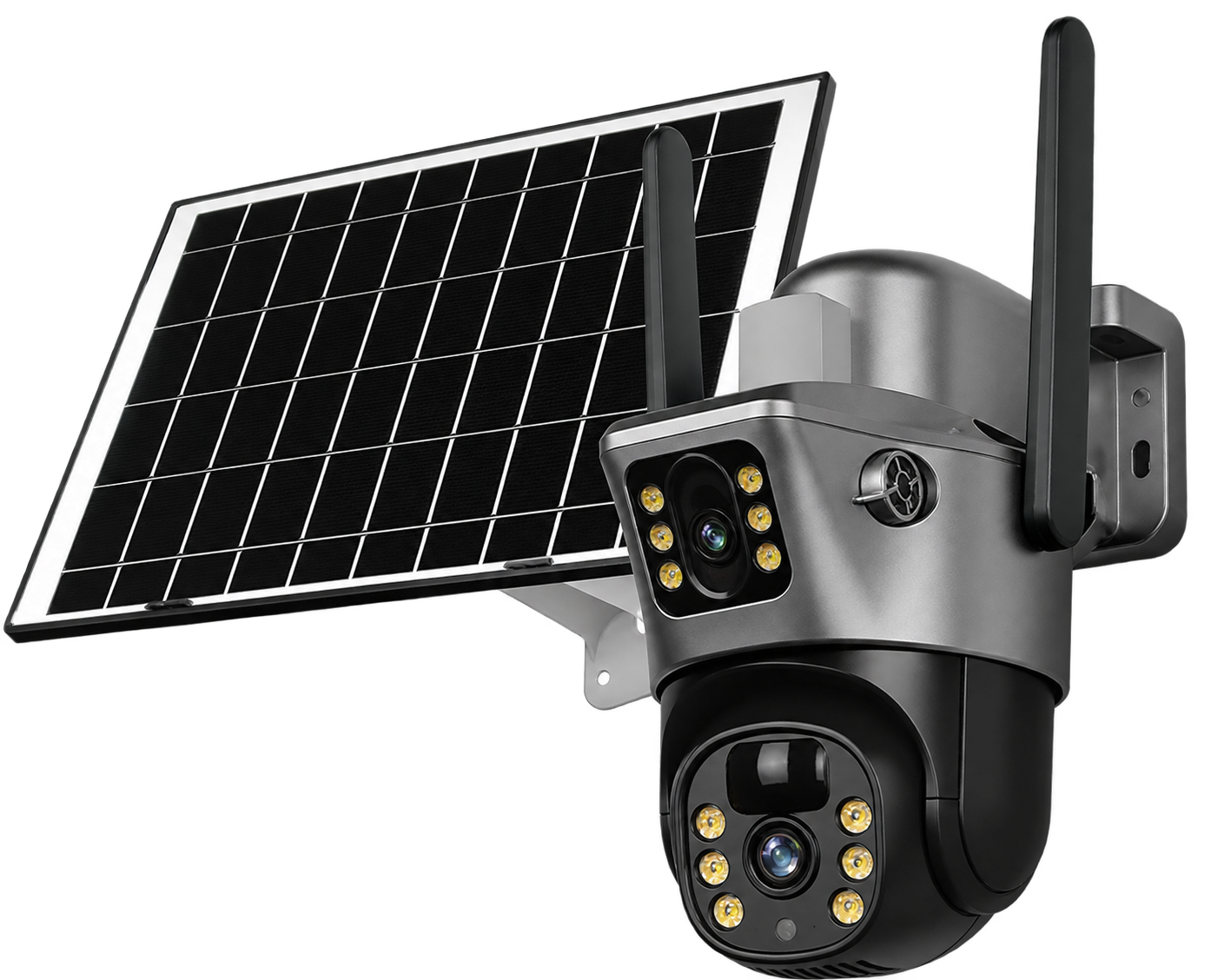
Key Points for Buyers
- WiFi and 4G describe connectivity; solar describes the power arrangement.
- Choose a camera around local coverage, available power and recording needs.
- Confirm LTE bands, battery capacity, panel configuration and app support by model.
Are WiFi, 4G and solar three separate camera types?
WiFi and 4G refer to how a camera connects to a network. Solar refers to how it is powered. A solar camera can use WiFi or 4G, so buyers should compare connectivity and power as two separate decisions.
WiFi cameras: locations with a suitable network
WiFi models are suitable when the installation has compatible network coverage. Confirm supported frequency bands, signal strength at the mounting location and the available power supply. Indoor cameras, outdoor bullet cameras and pan-and-tilt models serve different coverage needs.
4G cameras: sites without a suitable WiFi connection
A cellular camera needs compatible local LTE bands, an activated SIM and adequate mobile signal. Check the chosen carrier and data plan for the installation. Some 4G cameras use external power; others combine a battery and solar panel.
Solar cameras: plan the power budget
Assess sunlight, shading, panel orientation, charging conditions and recording activity. Solar charging and battery capacity must suit the site. Runtime varies with events, recording settings, signal conditions and temperature; a fixed operating time should not be assumed across models.
Practical comparison for buyers
| Selection factor | WiFi camera | 4G camera | Solar-powered configuration |
|---|---|---|---|
| Network requirement | Compatible WiFi coverage | LTE signal, local bands and SIM | WiFi or 4G, depending on model |
| Power to confirm | Adapter, battery or other model-specific supply | External power or battery/solar options | Panel, charging system and battery |
| Typical scenario | Homes, shops and offices with WiFi | Remote sites without local WiFi | Outdoor sites with suitable sunlight |
| Sample checks | Pairing, coverage and app experience | Carrier compatibility and data usage | Charging and operating performance |
Build a product line around actual applications
Define the buyer channel, target country, installation environment, recording needs and price target. Compare approved model sheets and samples before placing a bulk order. App support, storage limits, weather ratings and detection functions are model-specific.